Cute Brain Cartoon ClipArt 3: A Versatile Freebie for Creative Designers
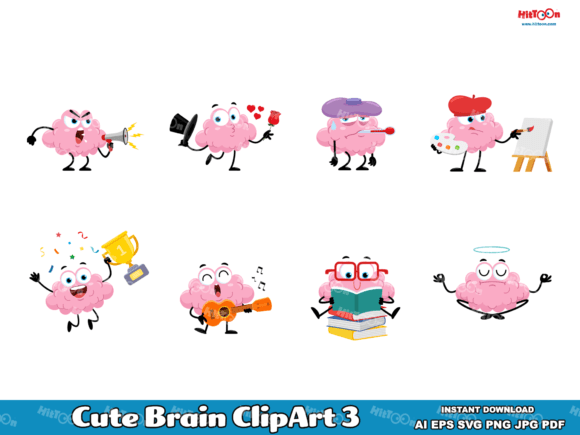
As a seasoned graphic designer, I’m always on the lookout for high-quality design assets that can elevate a project without compromising style or professionalism. Recently, I had the chance to review Cute Brain Cartoon ClipArt 3, a set of eight flat-design vector illustrations. This freebie caught my attention for its charm and adaptability, but as with any asset intended for real client use, it’s important to evaluate how well it performs in different design contexts.
First Impressions: Playful and Modern
The first thing I noticed about Cute Brain Cartoon ClipArt 3 is its visual tone. It’s undeniably playful—think soft curves, rounded edges, and a generally approachable aesthetic. The brain motifs are stylized rather than anatomically accurate, which makes them feel more like whimsical icons than scientific diagrams. These characteristics suggest they’d be best suited for projects targeting younger audiences, educational brands, or creative startups looking to inject some personality into their visuals.
The color palette is bright and cheerful, leaning toward pastels and muted tones that work well together. Since it’s a flat design, there's no shadow or texture to complicate layering, which means these graphics are easy to integrate into both digital and print projects. The overall impression is one of modern simplicity with a touch of fun—perfect for a handmade business or an Etsy shop aiming to stand out in a crowded marketplace.
Real-World Application in Client Projects
Let’s imagine a scenario where a small brand owner is launching a new line of stationery and educational toys aimed at children aged 5–10. They want branding that feels smart yet friendly. That’s where Cute Brain Cartoon ClipArt 3 could shine.
In this context, I used the clipart in several ways:
- Logo Design: While the brains themselves wouldn’t serve as a logo, they worked beautifully as supporting elements in a larger visual identity system. Placed subtly in corners or behind taglines, they added a sense of curiosity and creativity without being distracting.
- Product Labels and Packaging: On gift boxes and product tags, the brains were great for reinforcing the theme of “thinking outside the box.” Their flat nature allowed them to sit neatly alongside other text and icons, maintaining a clean layout while adding character.
- Social Media Graphics: For Instagram posts and Pinterest pins promoting the toy line, the clipart helped create engaging hero images. When paired with bold sans-serif fonts and vibrant backgrounds, the designs felt energetic and eye-catching.
- Print-on-Demand Assets: In t-shirt and mug mockups, the clipart was especially effective when placed on light-colored substrates. The soft lines and colors translated well into merchandise, giving the products a youthful, artistic appeal.
- Editorial and Blog Visuals: Used as decorative accents in blog headers and infographics, the brains enhanced the storytelling aspect by symbolizing learning and growth. They also worked well as section dividers in editorial layouts.
One standout use case was in a Canva template designed for a Cricut project. The clipart seamlessly integrated into layered paper crafts, showing its versatility across different creative mediums.
Where It Works Best
Cute Brain Cartoon ClipArt 3 excels in areas where a themed collection of whimsical design assets is needed. Here are some of the top scenarios where it adds value:
- Hero Graphics and Large Layout Areas: Its bold shapes and colors make it ideal for background illustrations or full-page designs where it can take center stage.
- Themed Campaigns and Merchandise: Whether you're creating a back-to-school campaign or a brain-themed giveaway, these illustrations provide a cohesive visual language.
- Printable Wall Art and Sticker Designs: The clean vector format ensures crisp printing, even at large sizes, making it suitable for home decor and educational materials.
- Supporting Brand Elements: As part of a broader brand identity, these graphics can act as secondary symbols that complement a logo or color scheme without overpowering it.
- Instagram Posts and Digital Ads: The flat design and limited detail ensure fast load times and clear visibility on mobile screens, which is crucial for social media engagement.
Where Caution Is Needed
While Cute Brain Cartoon ClipArt 3 is versatile, it’s not a one-size-fits-all solution. There are certain situations where its use might require careful consideration:
- Small Sizes: At resolutions under 100px, the details become less legible. For micro-icons or tiny badges, consider using a simpler version or scaling down thoughtfully.
- Crowded Layouts: The brains have enough visual weight that they can compete with too much text or other graphics if not balanced properly. Use them sparingly in complex compositions.
- Low-Contrast Backgrounds: If your project uses gradients or subtle patterns, the clipart may lose its impact. Always test against multiple background types before finalizing a layout.
- Minimalist Branding: For clients seeking a sleek, modern look with minimal distractions, the cartoonish style may clash. However, it can still work as a pop element if used intentionally and selectively.
- Professional Corporate Materials: Unless the corporate brand has a very casual or educational focus, these illustrations might not fit the tone required for formal reports, presentations, or business proposals.
Design Considerations for Commercial Use
Before integrating Cute Brain Cartoon ClipArt 3 into a client project, there are a few practical checks every designer should perform:
- Test in Black and White: The original color palette works well, but converting to grayscale helps determine whether the shapes remain visually strong without color.
- Check Contrast on Light and Dark Backgrounds: The PNG files included in the ZIP archive offer transparency options, so previewing them on both white and dark substrates is essential.
- Preview at Different Sizes: Resize the clipart from thumbnails to posters to ensure it maintains clarity and doesn't pixelate or appear blurry.
- Place on Real Mockups: Try placing the graphics on actual product mockups like mugs, tote bags, or stickers to see how they look in context. This helps identify any sizing or alignment issues.
- Review File Formats: The bundle includes SVG, EPS, AI, PDF, PNG, and JPG—so designers can choose the right file type for their workflow. Vector formats (AI, EPS, SVG) allow for scalability and editing, while PNGs are ready to go for quick integrations.
- Inspect PNG Transparency: For overlaying on photos or textured backgrounds, the PNGs with transparent backgrounds are invaluable. Make sure the alpha channel is intact and the edges are clean.
- Confirm Commercial Licensing: Although the description mentions commercial use, always double-check the license terms to ensure it aligns with your client’s needs—especially for print-on-demand or sublimation projects.
- Compare With Font Styles: The clipart pairs best with sans-serif or handwritten fonts. Test it with serif or script styles to avoid clashing aesthetics unless intentional.
Impact on Readability and Brand Consistency
One of the key concerns in any professional design is ensuring that the visual elements don’t interfere with readability. In most cases, Cute Brain Cartoon ClipArt 3 does a good job of staying in the background when necessary. However, when placed near body text or headlines, it’s important to maintain adequate spacing so it doesn’t overwhelm the message.
From a brand consistency standpoint, these graphics can help reinforce a lighthearted, educational, or creative brand identity. But they shouldn’t be used haphazardly. A strategic approach—such as selecting just one or two brain variations and repeating them across materials—can build stronger visual recognition and trust with the audience.
Emotional Appeal and Audience Engagement
What really sets Cute Brain Cartoon ClipArt 3 apart is its emotional resonance. The brains evoke curiosity, intelligence, and playfulness, all of which are powerful triggers for engagement. In a recent project for a children’s puzzle company, these illustrations increased the perceived value of the product and made the packaging feel more inviting.
For digital sellers or those operating in the creative marketplace, this kind of emotional appeal is gold. It encourages sharing, saves, and repeat visits—all of which are critical for online visibility and sales.
Final Thoughts for Designers
In conclusion, Cute Brain Cartoon ClipArt 3 is a solid addition to any designer’s toolkit, particularly when working with clients in education, kids’ products, or lifestyle brands. Its flat design makes it easy to customize and apply across various platforms—from web design to product mockups. And as a freebie, it offers excellent value for those who need a quick boost in visual creativity without breaking the budget.
However, like any graphic design asset, it requires thoughtful placement and adaptation. It’s not a replacement for strong typography or clean hierarchy, but it can enhance both when used correctly. Before handing off to a client, I recommend running through the checklist above to ensure it meets the standards of a professional project.
If you’re designing for a local event, a themed product launch, or an online course, and you’re looking for a way to add a little extra spark to your visuals, this set is worth exploring. Just remember: context is everything, and knowing where—and how—to place these illustrations will determine their success in your next design.